Builder, not commentator
The book is backed by operating work: Qtonic Quantum Corp, Qtonic Quantum Lab, QScout for quantum risk discovery, and QStrike for adversarial quantum testing on real quantum hardware.
About the author
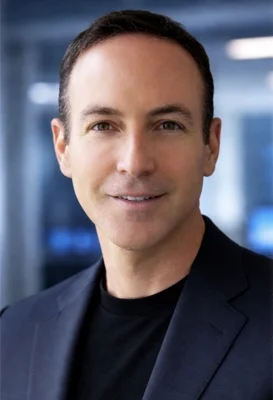
J. Nathaniel Ader is the author of The Quantum Almanac 2026-2027, Co-Founder and Chief Innovation Officer of Qtonic Quantum Corp, and founder of Qtonic Quantum Lab. He built QScout and QStrike to help organizations identify quantum risk across cryptographic debt, HNDL exposure, compliance frameworks, and quantum-informed testing. He brings experience across finance and technology, with an MBA and a BA from New York University.
J. Nathaniel Ader is the author of The Quantum Almanac 2026-2027. He is Co-Founder and Chief Innovation Officer of Qtonic Quantum Corp, founder of Qtonic Quantum Lab, and builder of QScout (quantum risk discovery across 70 scanning modules) and QStrike (adversarial quantum testing on real quantum hardware). He holds an MBA and a BA from New York University. The foreword is written by Lt. Gen. Mark E. Weatherington, USAF (Ret.), Chairman of the Defense Innovation Council at Qtonic Quantum Corp.
Operating principles
The book is backed by operating work: Qtonic Quantum Corp, Qtonic Quantum Lab, QScout for quantum risk discovery, and QStrike for adversarial quantum testing on real quantum hardware.
QScout and QStrike translate quantum risk into measurable output: cryptographic debt assessment, HNDL exposure analysis, compliance mapping, and quantum-informed offensive testing across 70 scanning modules.
Cross-domain experience spanning finance and technology, with an MBA and BA from New York University, supporting a board-facing security narrative grounded in institutional reality.
Positioning
The case for the book ties directly to the work behind it: building QScout for quantum risk discovery across 70 scanning modules, QStrike for adversarial quantum testing on real quantum hardware, and shaping Qtonic Quantum Lab as the evaluation and scoring engine that grounds the analysis in evidence.
Explore further